Source Self Starting Portable Electric Alternator for Land Use, Standby, Emergency
Explore 30 listings of self starting portable electric alternator units designed for land use, standby power, and emergency crew applications. Buyers can compare specifications including power output, cooling methods, and starting systems from verified Chinese manufacturers.
Key considerations
Products List




Comprehensive Sourcing Guide
Self Starting Portable Electric Alternator Sourcing Guide
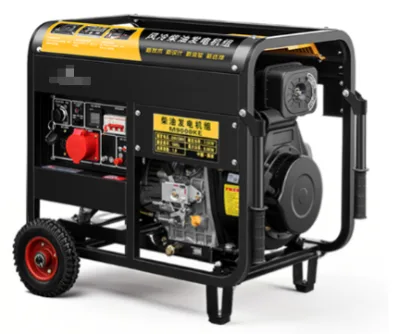
Procuring self-starting portable electric alternators requires a nuanced understanding of the distinction between standalone alternators and complete generator sets. In the current market, the term "alternator" is often used interchangeably with "generator" by suppliers, yet the technical reality differs significantly. A true alternator is a component that converts mechanical energy into electrical energy, whereas a complete portable generator unit integrates an engine, an alternator, a frame, and a control panel. Buyers must clarify whether they are sourcing replacement components for existing machinery or complete power units. The supplied data indicates a strong prevalence of complete self-starting diesel and gasoline generator units, such as the GD14500 and HL series, rather than isolated alternator heads. This distinction is critical for procurement accuracy, as the integration of the excitation system, voltage regulation, and engine coupling dictates the final performance and compatibility of the power source.
The observed product landscape reveals a diverse range of configurations tailored to specific operational needs, from low-noise land-use units to emergency crew power supplies. Key attributes observed include four-stroke engines, air-cooled or water-cooled systems, and various starting mechanisms, predominantly electric start with some recoil options. The presence of AC rotating exciters suggests a focus on brushless technology, which offers higher reliability and lower maintenance compared to brushed systems. Buyers should recognize that "self-starting" typically implies an automatic transfer switch or a remote start capability, though the data primarily highlights electric start mechanisms for individual units. Understanding these technical variances allows procurement teams to align their specifications with the actual capabilities of the suppliers, ensuring that the purchased equipment meets the rigorous demands of standby, emergency, or common unit applications.
Product Scope and Observed Listing Signals
The current market listings for self-starting portable electric alternators and generator sets exhibit a wide price range, observed between $1 and $49,999 USD, reflecting the disparity between small portable units and larger industrial-grade systems. The minimum order quantity (MOQ) ranges from 1 to 50 units, indicating that suppliers are flexible enough to accommodate both single-unit replacement purchases and bulk procurement for large-scale projects. This flexibility is particularly advantageous for buyers who need to test a single unit for compatibility before committing to a larger order. The variation in pricing and MOQs suggests a fragmented supplier base, ranging from small workshops producing compact gasoline generators to larger manufacturers offering diesel-powered solutions with extensive customization options.
Product models such as the GD14500, HL3000, HL6000, HL4000, and XYG3500I(E) represent specific configurations within this scope, each with distinct physical and operational characteristics. For instance, the HL4000 is a compact, hand-start or electric-start unit with a 99cc displacement, while the GD14500 appears to be a larger, four-stroke diesel unit designed for land use. The packing methods vary from simple brown cartons to wooden pallets, which directly impacts shipping costs and handling requirements. Buyers should note that the term "portable" in these listings often refers to units that can be moved by two people or mounted on a trolley, rather than truly lightweight handheld devices. The observed data highlights a mix of single-phase outputs and various voltage ratings, catering to both residential and light commercial needs.
Technical Specifications to Verify
When evaluating technical specifications, the first priority is verifying the engine type and cooling method, as these factors determine the unit's durability and operational environment. The supplied data indicates a mix of forced air-cooled and water-cooled engines, with four-stroke configurations being standard. For example, the HL4000 features a 4-stroke, OHV engine with a 99cc displacement, suitable for light-duty applications, while other models may utilize more robust diesel engines for heavy-duty use. Buyers must confirm the cooling method, as air-cooled units are generally lighter and easier to maintain but may overheat under continuous high-load conditions, whereas water-cooled units offer better thermal management for extended operation. The excitation mode, specifically AC rotating exciter, is a critical technical detail that ensures stable voltage output and reduces maintenance needs by eliminating brushes.
Electrical output parameters, including phase, voltage, and power rating, must be meticulously cross-referenced with the buyer's load requirements. The observed products predominantly offer AC single-phase output, with rated voltages spanning 100V to 240V, accommodating global standards. Power ratings vary significantly, with some units like the HL4000 offering a rated AC output of 1.7kW and a maximum of 2.0kW, while others may exceed 5kW. Buyers should verify the continuous operating hours and load capacity, as the HL4000, for instance, can operate for 3.8 hours at 100% load. Additionally, physical dimensions and weight, such as the 555x315x490mm size and 18.5kg net weight of the HL4000, are essential for logistics planning and site installation. The starting system, whether electric or recoil, also impacts usability, with electric start being preferred for emergency applications where rapid deployment is necessary.
Compliance and Safety Documentation
Compliance with international safety and environmental standards is non-negotiable for portable power equipment, especially when used in regulated markets. The supplied data lists a comprehensive set of certificates, including CE, GS, EPA, RoHS, Euro5, EC, EMC, BSCI, and ISO9001. Buyers must verify that these certifications are valid and applicable to the specific model being purchased, as certification status can vary between product lines and manufacturing batches. The CE mark, for instance, is mandatory for products sold in the European Economic Area, indicating conformity with health, safety, and environmental protection standards. Similarly, EPA and Euro5 certifications are crucial for engines sold in North America and Europe, respectively, ensuring that emissions meet strict regulatory limits.
Beyond product-specific certifications, buyers should request documentation related to quality management systems, such as ISO9001, which indicates that the supplier follows standardized processes for manufacturing and quality control. The presence of EMC (Electromagnetic Compatibility) certification is particularly important for electronic equipment, as it ensures that the generator does not interfere with other electronic devices and is resistant to external electromagnetic interference. Buyers should also inquire about the testing procedures used to validate these certifications, such as noise level tests, which for the HL4000 are reported at 60dB at 7 meters. Ensuring that the supplier provides valid test reports and certificate copies is a critical step in mitigating the risk of non-compliance and potential customs delays or legal liabilities.
Cost Drivers and Commercial Terms
The cost of self-starting portable electric alternators is influenced by several key factors, including engine type, power output, cooling method, and included features. Diesel engines, which are often more durable and fuel-efficient for heavy-duty use, typically command a higher price than gasoline engines used in lighter portable units. The inclusion of advanced features such as automatic voltage regulation, remote start capabilities, and low-noise enclosures also adds to the overall cost. Buyers should analyze the price-to-performance ratio, considering not just the initial purchase price but also the long-term operational costs, such as fuel consumption and maintenance requirements. The observed price range of $1 to $49,999 USD reflects these variations, with smaller, less powerful units at the lower end and larger, more feature-rich systems at the higher end.
Commercial terms, including MOQs, payment terms, and shipping conditions, play a significant role in the total cost of ownership. The observed MOQ range of 1 to 50 units allows for flexibility, but buyers should negotiate for better pricing or terms when ordering larger quantities. Shipping costs can be substantial due to the weight and dimensions of the units, so understanding the packing method, such as carton with wooden pallets, is essential for accurate freight calculation. Buyers should also consider the lead time, although specific values are not provided in the data, and plan accordingly to avoid project delays. Clear communication regarding Incoterms, such as FOB or CIF, will help define the responsibilities of both buyer and seller regarding shipping and insurance, ensuring a smooth transaction process.
Supplier Qualification and Quality Control
Supplier qualification is a critical step in ensuring the reliability and consistency of the purchased equipment. Buyers should verify the supplier's manufacturing capabilities, including their production capacity, quality control processes, and after-sales support. The observed data indicates that suppliers are located in China, specifically in Fujian and Fuzhou, which are known hubs for generator manufacturing. Buyers should request information about the supplier's factory audits, production lines, and testing facilities to assess their ability to maintain consistent quality. Additionally, verifying the supplier's experience in exporting to the buyer's region can provide insights into their understanding of local regulations and customer expectations.
Quality control measures should be clearly defined and agreed upon before placing an order. This includes specifying inspection points during production, such as raw material checks, assembly line inspections, and final product testing. Buyers should request sample units for pre-shipment inspection to verify that the products meet the agreed-upon specifications and quality standards. The inclusion of certificates like ISO9001 suggests that the supplier has a documented quality management system, but buyers should still conduct their own due diligence to ensure that these standards are effectively implemented. Establishing a clear communication channel for addressing any quality issues or defects post-delivery is also essential for maintaining a productive supplier relationship.
Long-Term Procurement Checks
Long-term procurement success depends on establishing a robust framework for ongoing supplier evaluation and product performance monitoring. Buyers should implement a system for tracking key performance indicators (KPIs) such as delivery times, product defect rates, and customer satisfaction scores. Regular reviews of these metrics can help identify potential issues early and allow for corrective actions to be taken. Additionally, buyers should maintain open lines of communication with suppliers to discuss any changes in product specifications, regulatory requirements, or market conditions that may impact future orders. This proactive approach ensures that the procurement process remains aligned with the buyer's evolving needs and strategic goals.
Sustainability and environmental considerations are increasingly important in long-term procurement strategies. Buyers should encourage suppliers to adopt environmentally friendly practices, such as using recyclable packaging materials and optimizing production processes to reduce waste and emissions. The observed certifications, such as RoHS and Euro5, indicate a commitment to environmental compliance, but buyers should go further by requesting detailed information on the supplier's sustainability initiatives. By integrating these considerations into their procurement strategy, buyers can not only mitigate risks but also enhance their brand reputation and contribute to a more sustainable supply chain. This holistic approach ensures that the procurement of self-starting portable electric alternators supports both immediate operational needs and long-term strategic objectives.
FAQs
What is the rated AC output of the HL4000 self starting portable electric alternator
The HL4000 model has a rated AC output of 1.7kW and a maximum AC output of 2.0kW. It operates on a single-phase system with voltage options including 100, 110, 120, 220, 230, and 240V. This capacity is suitable for small-scale portable power needs.
How does the HL4000 self starting portable electric alternator start
The HL4000 uses a hand start system with a recoil starting mechanism. It features a forced air-cooled, 4-stroke OHV engine with a displacement of 99cc. This design allows for manual operation without requiring an electric battery for initial startup.
What is the fuel tank capacity of the HL4000 self starting portable electric alternator
The HL4000 has a fuel tank capacity of 4.1L or 3.6L depending on the specific configuration. It can operate continuously for 3.8 or 3.4 hours at 100% load. The lubricator oil capacity is 0.52L, ensuring adequate lubrication during operation.
What are the dimensions and weight of the HL4000 self starting portable electric alternator
The overall dimensions are 555x315x490mm. The net weight is 18.5kgs and the gross weight is 21kgs. It is packed in a brown or colored carton or on pallets, making it suitable for portable use and easy transport.
What certifications does the HL4000 self starting portable electric alternator hold
The HL4000 holds CE, GS, EPA, RoHS, Euro5, Ec, EMC, BSCI, and ISO9001 certifications. These certifications indicate compliance with international safety, environmental, and quality standards. They are important for buyers requiring verified product compliance in various markets.
What is the operating noise level of the HL4000 self starting portable electric alternator
The operating noise level is 60dB at a distance of 7 meters. This low noise level makes it suitable for environments where quiet operation is required. It is designed for land use and can be used as a common unit, standby unit, or emergency crew power source.
What is the packaging for the HL4000 self starting portable electric alternator
The HL4000 is packed in a brown carton, colored carton, or on pallets. The packing options allow for flexible shipping and storage. This packaging ensures the unit is protected during transit and ready for immediate use upon arrival.